



BLD-04 · Building technology
Public address and background music people can actually hear
A paging system that's loud but unclear is worse than none. We design for intelligibility first, then for volume and music.
Zones and coverage
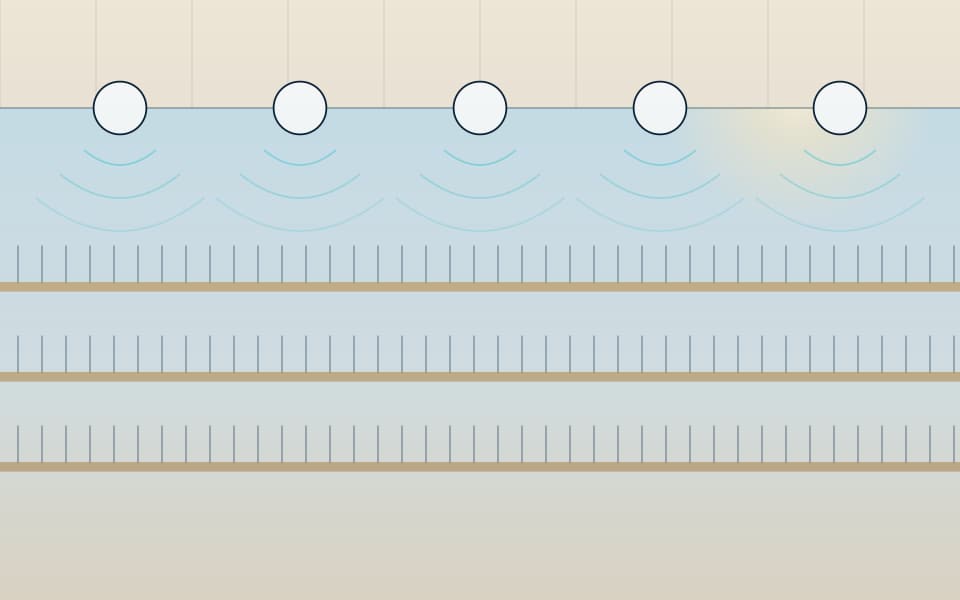
Zones follow how the building is used: lobby, restaurant, back of house, car park, outdoor areas. Each zone gets its own source selection and volume. Loudspeaker spacing follows ceiling height and the target level above background noise, so the sound is even rather than loud under each speaker and quiet between them.
Most commercial systems use 100 V line distribution, which lets many speakers run from one amplifier channel over long cable runs. Amplifier capacity is calculated from the tap settings with headroom, not guessed.
Intelligibility

Speech Transmission Index (STI) measures how well speech is understood in a space, from 0 to 1. Large hard spaces such as atriums and car parks reduce STI through reverberation. More speakers at lower volume, directional speakers, and keeping announcements clear of music all help. Where intelligibility is specified, we predict it at design stage and measure it after installation.
Voice alarm systems used for fire evacuation are life-safety systems with their own standards and approvals. We don't supply or certify fire voice alarm systems. Our PA systems are for paging and background music, and can receive a mute or priority signal from the fire system through a designed interface.
Our part, start to finish
What we do on a public address project
We don't sell the equipment. We design the system, install and commission it, and keep it working.
Design & consulting
- Zone plan and coverage design
- Amplifier and tap calculations
- STI prediction where required
- Interfaces to fire system and paging sources
Installation
- Speaker and amplifier installation
- DSP tuning and level setting
- Schedules and paging stations
- Measurement and handover report
Maintenance
- Speaker and line checks
- Amplifier health checks
- Schedule and content updates
- Fault response
Before you buy
Questions to settle first
These decide cost and performance more than the brand on the box. We work through them with you at survey stage.
- Which areas need paging, and which need music only?
- How noisy are those areas at peak times?
- Who makes announcements, and from where?
- How must the system respond to a fire alarm?
- Do you need scheduled announcements or music?
- Are there outdoor areas exposed to sun and dust?
Gallery
Public address in context
Illustrations show typical arrangements, not specific projects. Select an image to enlarge it.