

PWR-05 · Power continuity
Generator interfaces that carry your systems through an outage
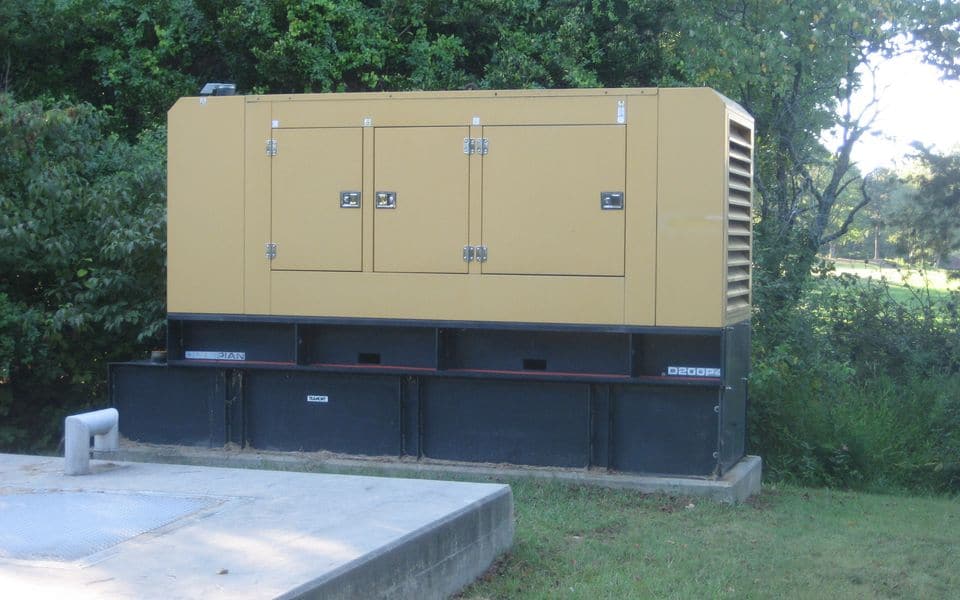
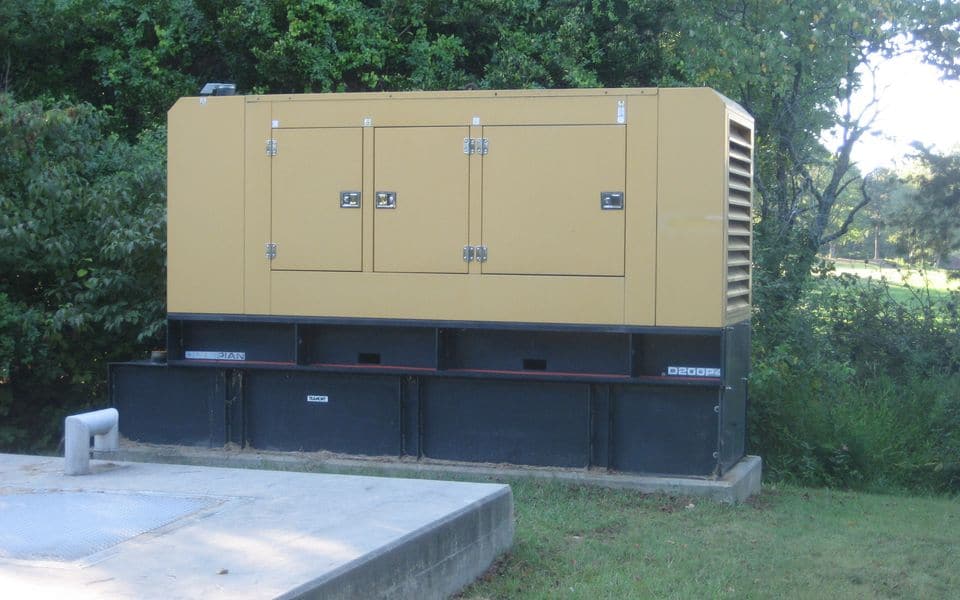
A standby generator only protects your systems if the transfer, the loads and the tests are designed together. We design the interface between the generator, the ATS, the UPS and the systems behind them, and coordinate with whoever supplies and maintains the generator.
The transfer, and why a UPS bridges it
When mains fails, the generator controller waits a short delay to ignore brief dips, starts the engine and waits for voltage and frequency to settle. Only then does the automatic transfer switch (ATS) move the load across. The whole sequence takes seconds, often in the order of 10 to 30, and longer if the first start fails. When mains returns, the ATS waits to confirm it is stable and transfers back, which is usually a second break.
Recorders, switches, controllers and servers do not survive that gap. They reboot, a recorder can take minutes to resume recording, and a controller may lose events. That is why critical security and network loads sit on a UPS that carries them through both transfers, while the generator carries the UPS and recharges its batteries.
| Stage | What happens | What carries the security systems |
|---|---|---|
| Mains failure | The ATS detects loss of supply | UPS battery |
| Start delay and cranking | The generator starts and runs up to speed | UPS battery |
| Stabilisation and transfer | The ATS switches to the generator | UPS battery |
| Running on generator | The generator feeds the UPS input | Generator, through the UPS |
| Mains return | Retransfer after a stability delay | UPS, through the second break |
We also design the signals around the transfer: ATS position, generator running, generator fault and low fuel, wired to the building management system or the security system so the control room knows the site is on generator. Where the generator cannot carry everything, load-shedding signals drop non-critical loads first.
Sizing for electronic loads

Generator sizing belongs to the electrical designer and the generator supplier. Our part is to give them the real loads of the systems we design, with their characteristics, and to check that the generator and those loads will work together:
- Non-linear loads: UPS rectifiers and switch-mode power supplies draw harmonic currents. A generator has a higher source impedance than the grid, so those harmonics distort its voltage more. Generators feeding large UPS loads are often sized above the UPS rating; how much depends on the UPS input design, which is why we pass on the UPS input data, not just its kVA.
- Step loads: at transfer the whole load arrives at once. A UPS with a walk-in (soft start) function ramps its rectifier load over several seconds, which helps the generator; we set and verify it.
- Frequency window: generator frequency moves with load changes. The UPS input and bypass synchronisation window must accept it, or the UPS stays on battery and alarms repeatedly.
- Battery recharge: after an outage the UPS draws charging current on top of the load. We include it in the figures we give.
- Light load: a lightly loaded generator with capacitive loads, such as some UPS input filters, can become unstable. We flag it when the load mix makes it a risk.
Fuel, run tests and maintenance

A generator that has never run under real load is an assumption. We agree a test regime with the generator maintainer that proves the whole chain, not only the engine:
- Regular test runs, under load where possible. Repeated no-load runs don't prove the transfer and, on diesel engines, can cause wet stacking over time.
- Simulated mains failure: opening the incoming supply and watching the full sequence of start, transfer, UPS behaviour and retransfer. We attend and check the systems behind the UPS.
- Fuel: tank level monitoring, run time at the expected load, fuel quality (stored diesel degrades and can collect water and microbial growth) and refuelling arrangements.
- Records: start time, transfer time and any alarms, logged at each test and compared over time.
Engine maintenance (oil, filters, coolant and starter batteries) belongs to the generator maintainer. We align our UPS and battery visits with the generator test schedule, so a transfer test never happens while a UPS is in bypass or its batteries are disconnected.
We don't sell or supply generators. We design the interface, the loads and the transfer arrangements for the systems we install, and coordinate with the generator supplier and maintainer. Equipment is procured by you or your contractor against the specification.
Our part, start to finish
What we do on a generator interface
We don't sell generators. We design the interface and the loads, commission the transfer with the generator team, and keep the chain tested.
Design & consulting
- Load data for the generator designer
- ATS signals and load-shedding interface
- UPS input and walk-in settings
- Proposed test regime
Installation
- Interface wiring and signal tests
- UPS settings for generator operation
- Simulated mains-failure test with the generator maintainer
- Records of transfer times and behaviour
Maintenance
- Attendance at periodic transfer tests
- UPS and battery checks aligned with generator runs
- Review of alarms and run records
- Load updates as the systems grow
Before you buy
Questions to settle first
These decide whether the generator actually protects your systems. We work through them with you at survey stage.
- Is there a generator already, what is its rating, and who maintains it?
- How long from mains failure to carrying load, measured rather than quoted?
- Which loads are on the generator, and which sit on a UPS behind it?
- How much fuel is on site, and how long does it last at the expected load?
- Is generator status reported to the control room?
- When was the last test under real load?
Works alongside
Related systems
Power continuity
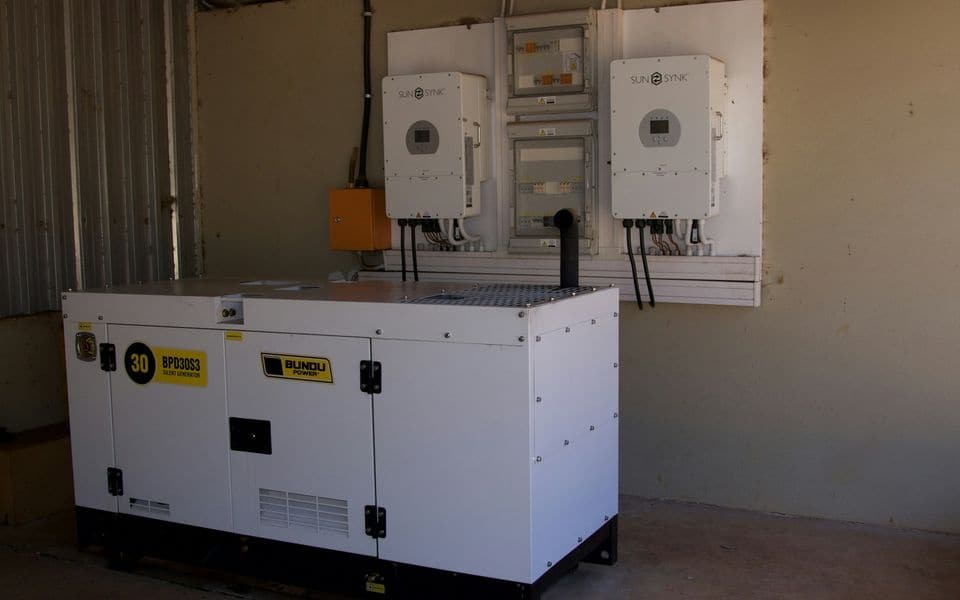
How UPS, central battery, generator and solar fit together.
Read more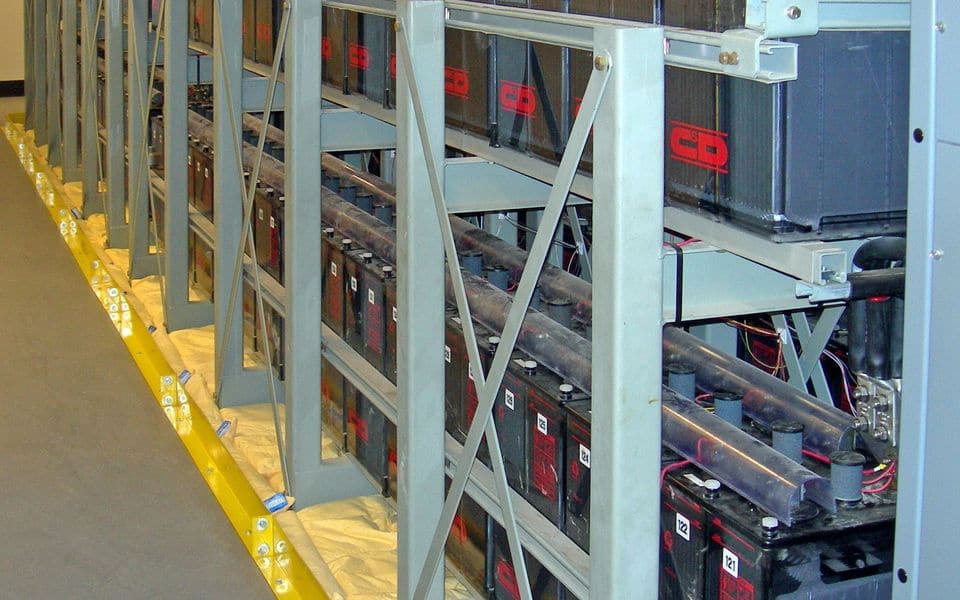
UPS systems
Online UPS sized by load and autonomy, with batteries that last.
Read more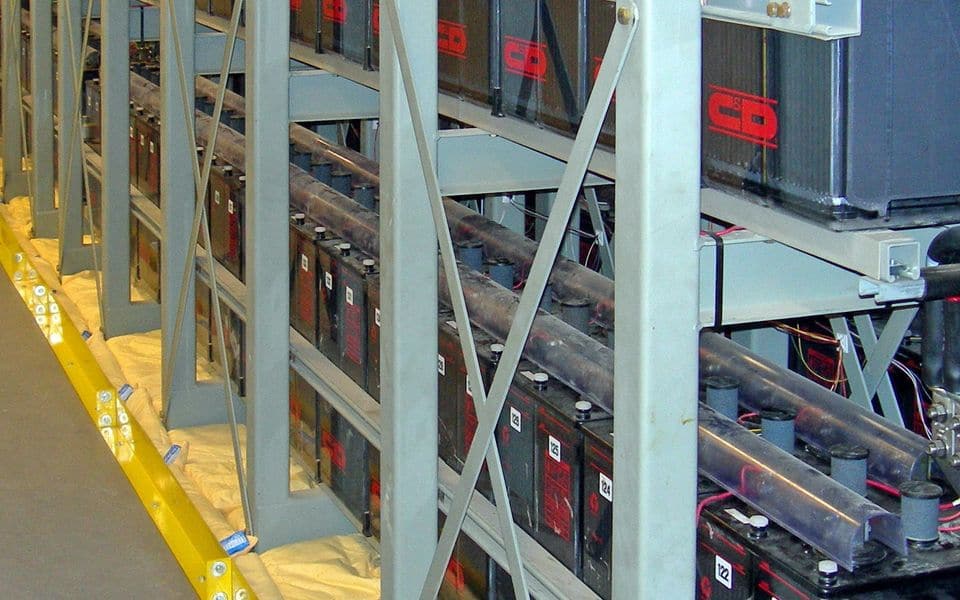
Central battery systems
Monitored power for emergency lighting to EN 50171.
Read more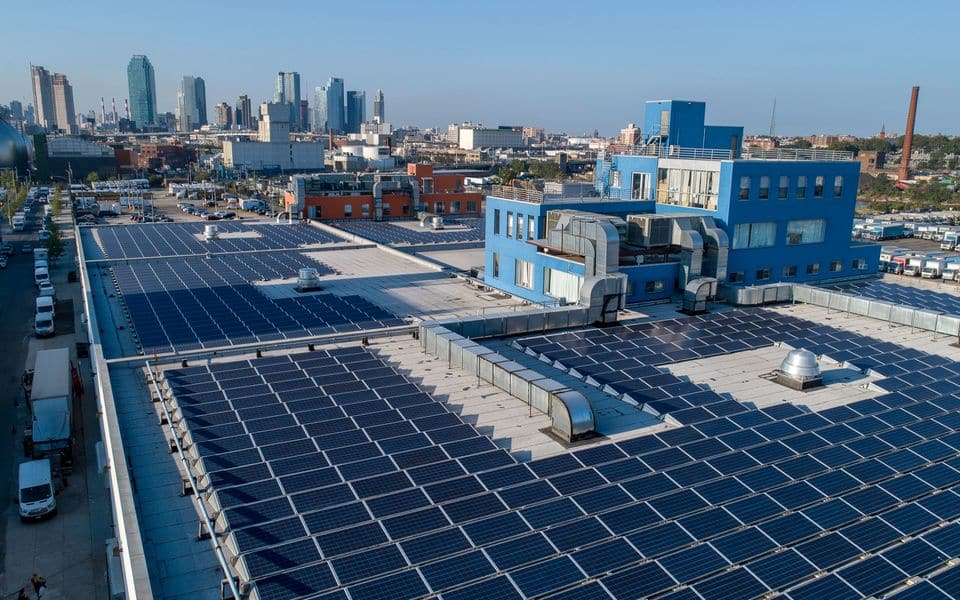
Solar PV
On-grid, hybrid and off-grid PV for buildings and remote points.
Read moreGallery
Generator interfaces in context
Illustrations show typical arrangements, not specific projects. Select an image to enlarge it.