

SEC-03 · Security & access
Intrusion and perimeter detection that people still trust after month three
An alarm system fails twice: once when it misses a real intrusion, and again when false alarms train everyone to ignore it. We design against both.
Indoor intrusion alarms
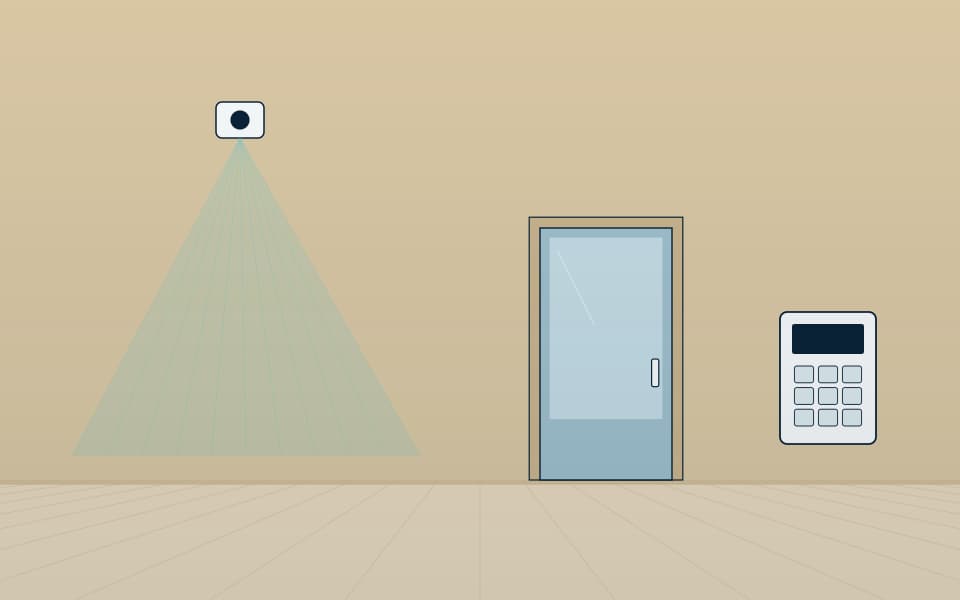
Intrusion systems combine detectors (dual-technology motion, door and window contacts, glass-break, seismic sensors on safes and walls), a control panel, keypads, and signalling to the people who respond. EN 50131 grades systems from 1 (low risk) to 4 (high risk). The grade drives detector type, tamper protection, signalling path redundancy and how the system resists being defeated. When a client or insurer specifies a grade, we design to it and document how each requirement is met.
Detector placement decides the false-alarm rate. Air-conditioning outlets, sunlight moving across a floor, and stock on high shelving all produce alarms when a motion detector is in the wrong place. The survey records those conditions for each area.
Fibre-optic perimeter fence detection

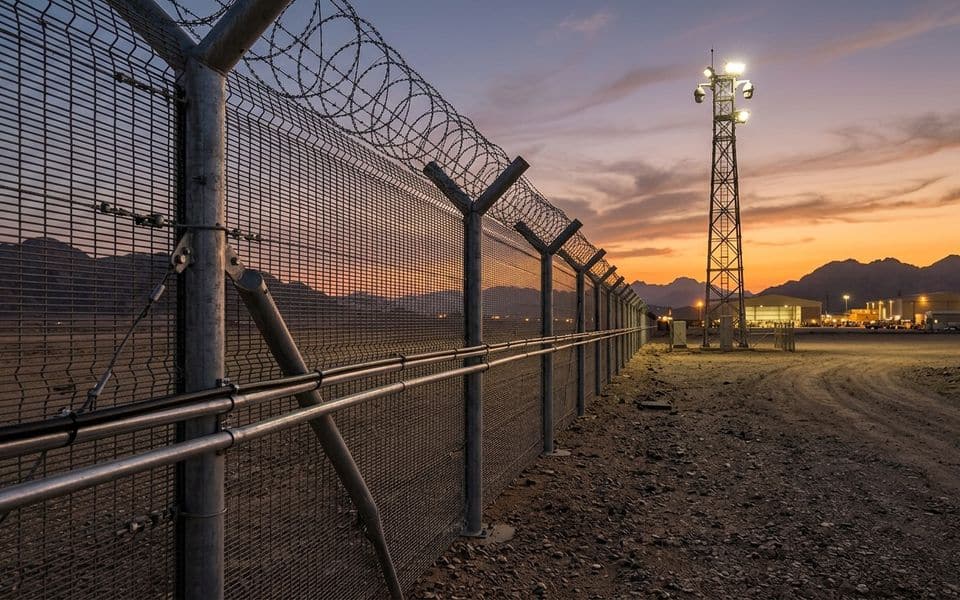
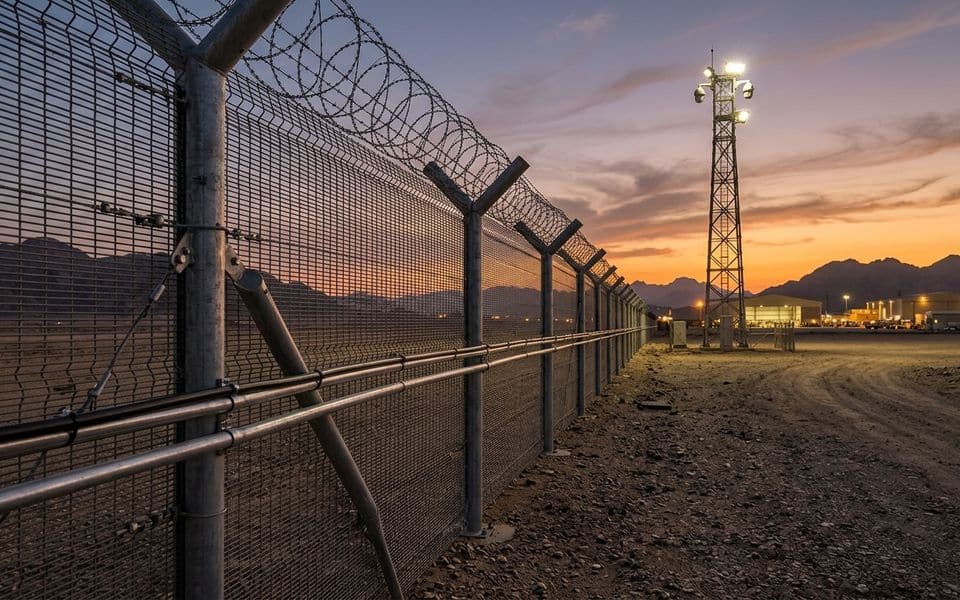
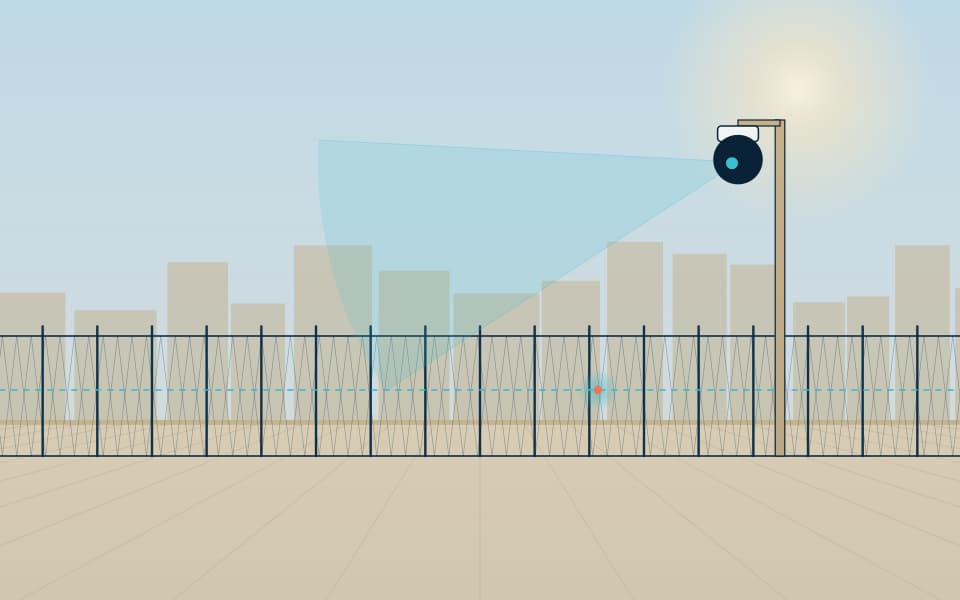
On long fence lines a sensing fibre cable is attached to the fence fabric. Climbing, cutting or lifting the fence creates vibration that the processor analyses. Two broad approaches exist:
- Zoned systems divide the perimeter into fixed zones and report which zone alarmed. Simple and robust, good for shorter perimeters.
- Distributed (location-resolving) systems locate the disturbance along a continuous cable, so one processor can cover kilometres and point a PTZ camera at the event.
Fence condition matters as much as the sensor. A loose, rattling fence produces alarms in the wind. We inspect and record fence tension, posts, gates and ground clearance during the survey and treat gates as separate zones with their own detection.
Nuisance alarms and verification
Wind, sandstorms, rain, animals and nearby traffic all produce signals. The fix is calibration on site with real conditions, per zone, and an alarm-verification step: each perimeter alarm brings up the camera view of that zone so an operator confirms before anyone is dispatched. We record the calibration settings so a later technician doesn't reset them blindly.
Our part, start to finish
What we do on a intrusion and perimeter project
We don't sell the equipment. We design the system, install and commission it, and keep it working.
Design & consulting
- Risk review and grade selection
- Detector layout with environmental notes
- Perimeter zoning and fence condition survey
- Alarm signalling and response design
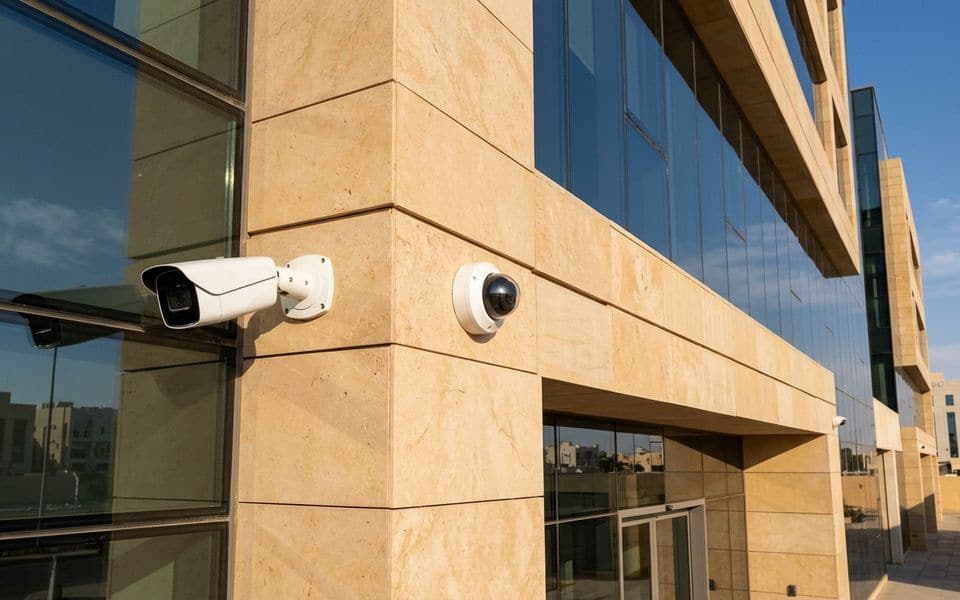
- Integration plan with CCTV
Installation
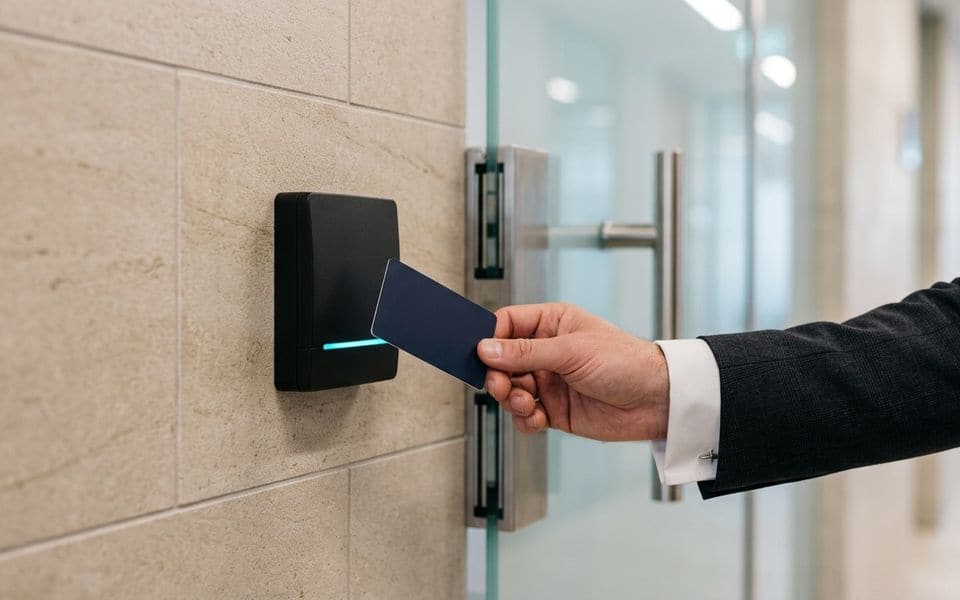
- Panel, detector and keypad installation
- Fence sensor attachment and termination
- On-site calibration per zone
- Walk tests and climb/cut simulations
- Response procedures and user training
Maintenance
- Detector walk tests and tamper checks
- Fence sensor re-calibration after seasonal change
- Battery and signalling path tests
- Alarm history review to cut nuisance alarms
- Fault and call-out response
Before you buy
Questions to settle first
These decide cost and performance more than the brand on the box. We work through them with you at survey stage.
- Who responds to an alarm, and how quickly can they get there?
- Has an insurer or authority specified a grade?
- Is the fence in good enough condition to carry a sensor?
- Can each perimeter zone be seen by a camera for verification?
- How will the system behave during a sandstorm?
- Which areas are occupied at night and need partial setting?
Works alongside
Related systems
Gallery
Detection in context
Illustrations show typical arrangements, not specific projects. Select an image to enlarge it.